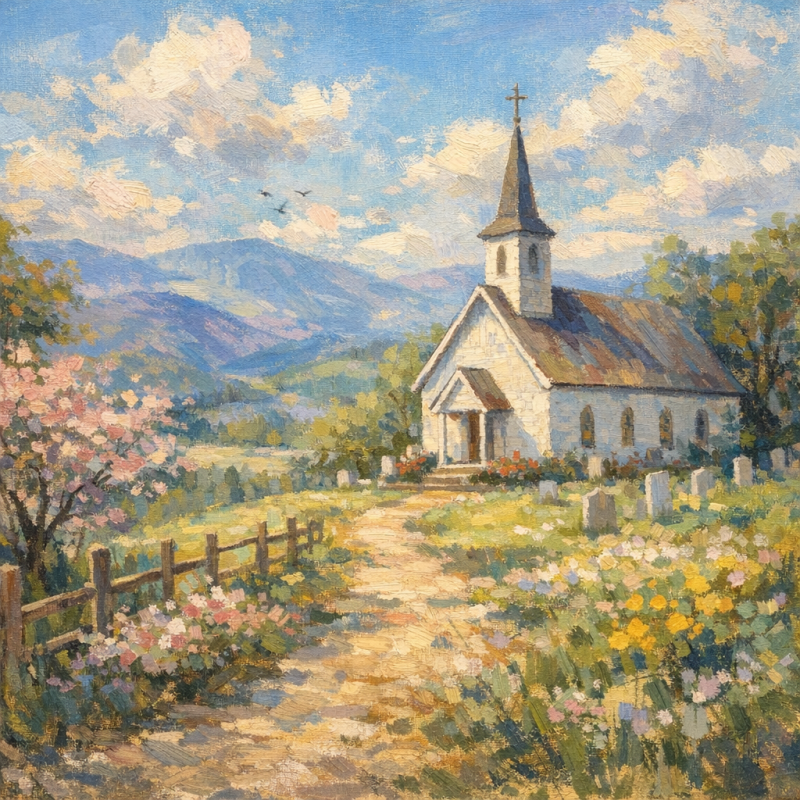
Faith communities have always been more than places of worship. For generations, churches have quietly served as the keepers of family identity—recording births, baptisms, marriages, deaths, and the rhythms of community life long before civil record‑keeping became consistent. For genealogists, these records are not just administrative notes; they are threads of story, belonging, and heritage.
The Church as an Early Record Keeper
Before counties formalized vital records, churches documented the milestones that shaped a family’s life. These records often predate courthouse archives by decades, sometimes centuries, making them essential for tracing early American, Appalachian, and immigrant families.
Church records typically include:
• Baptisms and christenings
• Membership rolls and transfers
• Marriage registers
• Funeral and burial logs
• Minutes from church meetings
• Sunday school rosters and class lists
• Special event programs—especially Easter and Christmas
Each of these sources offers a different angle on a family’s story, revealing not only dates and names but also relationships, migration patterns, and community ties.
Baptismal Records: Anchors of Identity
Baptismal entries often contain details unavailable anywhere else. A single line in a church register may list:
• The child’s full name
• Parents’ names (including maiden names)
• Godparents or sponsors
• Birth date and baptism date
• The minister who performed the ceremony
Sponsors are especially valuable—they often represent extended family or close community ties, helping genealogists map relationships that census records alone cannot reveal.
In communities where home births were common, baptismal records may be the earliest surviving documentation of a child’s existence.

Easter Programs: Seasonal Snapshots of Community Life
Easter has long been one of the most documented seasons in church life. Programs, bulletins, and special services often include:
• Lists of choir members
• Children’s program participants
• Memorial dedications
• Donor acknowledgments
• Photographs of the congregation or youth groups
These ephemeral items—often tucked into Bibles, scrapbooks, or church archives—capture a moment in time. They reveal who was active in the church, which families were connected, and how traditions evolved.
For genealogists, Easter programs can:
• Confirm a family’s presence in a congregation
• Provide approximate ages of children
• Reveal maiden names through dedications or acknowledgments
• Offer clues about family roles in the church (teachers, deacons, choir members)
Membership Rolls: Tracing Movement and Belonging

Membership lists are powerful tools for understanding how families moved, grew, and participated in their communities. These rolls may include:
• Dates of joining or transferring
• Notes on baptism or confirmation
• Reasons for removal (death, relocation, dismissal)
• Occupations or titles within the church
Transfers are especially revealing. They often show migration patterns—families moving for work, marriage, or new opportunities—and can help bridge gaps between counties or states.
In rural areas, membership rolls sometimes serve as the only surviving record of a family’s presence during years when census data is sparse or incomplete.
Cemetery Logs: Final Testimonies of a Life
Church cemeteries are genealogical treasure troves. Beyond the headstones themselves, cemetery logs and burial registers may include:
• Exact burial dates
• Plot ownership
• Notes on family relationships
• Causes of death
• Reinterments or relocations
• Unmarked or lost graves
These records often preserve details that never made it onto a stone, especially for infants, women, or those who could not afford engraved markers.
For families with deep roots in a congregation, cemetery logs can map entire lineages across generations—sometimes revealing forgotten branches or previously unknown children.
Why These Records Matter
Church archives offer something civil records rarely do: context. They show how a family lived within a community—who they worshipped with, who they trusted as godparents, who they mourned, and who they celebrated.
They also preserve:
• Cultural traditions
• Naming patterns
• Migration stories
• Faith practices
• Community leadership roles
For genealogists, these records transform a family tree from a list of names into a living narrative.
Bringing It All Together
Exploring church records—especially around seasons like Easter—invites us to see our ancestors not just as dates on a page, but as people who gathered, worshipped, sang, served, and built communities. These archives remind us that family history is woven through places of faith just as much as through courthouses and census books.
If you have a story or a unique genealogy or history topic you’d like to share, we invite you to reach out through our Contact page or connect with us on social media for a chance to be featured on History and Heritage.
Create Your Own Website With Webador