When we begin researching our family tree, it is easy to become focused on names, dates, and places. We search for birth certificates, marriage records, census entries, obituaries, and cemetery records. We carefully add each discovery to our family tree, hoping the next record will lead us to another generation. But genealogy is about much more than collecting names. To truly understand our ancestors, we must understand the places where they lived.
That is where local history becomes an essential part of good genealogy.
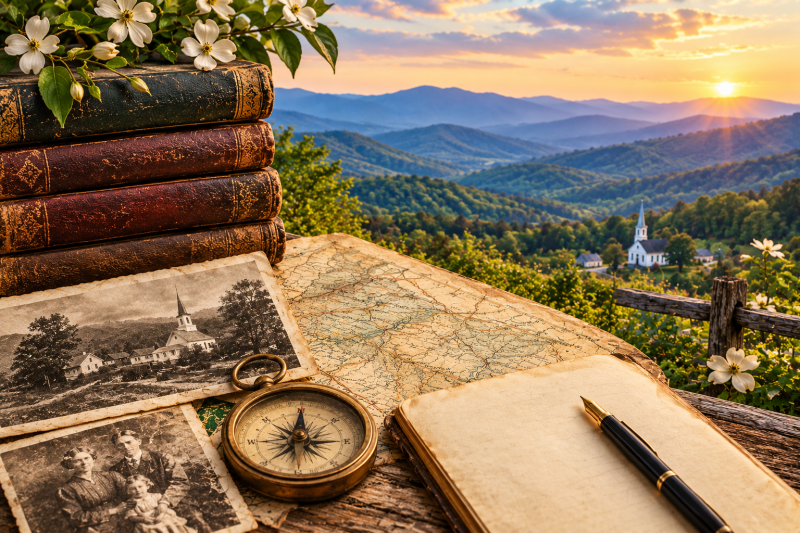
Your Ancestors Lived in Communities, Not Just Counties
A genealogy record may tell you that your great-grandfather was born in Alleghany County, North Carolina, in 1885. That is useful information—but it doesn't tell you what life was actually like for him.
- What did the community look like?
- What roads existed?
- How far did he have to travel to reach the courthouse?
- Where did people attend church?
- What industries provided employment?
- What schools were available?
- Was the community isolated, or did families regularly travel to neighboring counties?
Local history can help answer these questions. An ancestor's location isn't simply a place name on a census form. It was their home.
County Boundaries Can Change Your Research
One of the most important reasons to understand local history is that county boundaries change.
Your ancestor may appear to have been born in one county, married in another, and buried in a third. At first glance, this might suggest that the family moved frequently. That isn't necessarily the case.
Counties are created, divided, and sometimes have their boundaries changed. A community that was once part of one county may later fall within another. This can create considerable confusion for genealogists.
If you do not understand the historical geography of the area, you may search the wrong courthouse, the wrong county records, or even the wrong state. Before concluding that an ancestor moved, ask an important question:
Did the county move, or did the family? Sometimes, the answer can completely change your research.
Roads and Mountains Mattered

For families who lived in rural areas, geography played a major role in everyday life. Today, we can travel twenty or thirty miles in a relatively short amount of time. Our ancestors couldn't. A mountain ridge, river, creek, or poor road could make a neighboring community seem much farther away than it appears on a modern map. This is especially important when researching Appalachian families. Two families may have lived only a few miles apart as the crow flies, yet the terrain may have required a long journey between their homes. Understanding the landscape can explain why families married within a particular community, attended the same church, used the same cemetery, or repeatedly appeared alongside the same neighbors in historical records.
Neighbors Can Become Family History Clues
One of the most overlooked resources in genealogy is the neighbor. When examining a census record, don't stop after finding your ancestor's household. Look at the families living nearby. You may discover parents, siblings, cousins, in-laws, or longtime family friends. Even when relationships aren't immediately obvious, repeated associations can provide valuable clues. Local history can make these connections even more meaningful. Perhaps several families came from the same community in Virginia. Maybe they migrated together into North Carolina. Perhaps they attended the same church or worked at the same mill. What initially looks like a list of unrelated names may actually represent an entire migrating community.
Churches Were Often the Heart of the Community
Before modern government recordkeeping became widespread, churches frequently played an important role in documenting people's lives.
Church records may contain information about:
- Baptisms
- Marriages
- Deaths
- Membership
- Church discipline
- Burials
- Family relationships
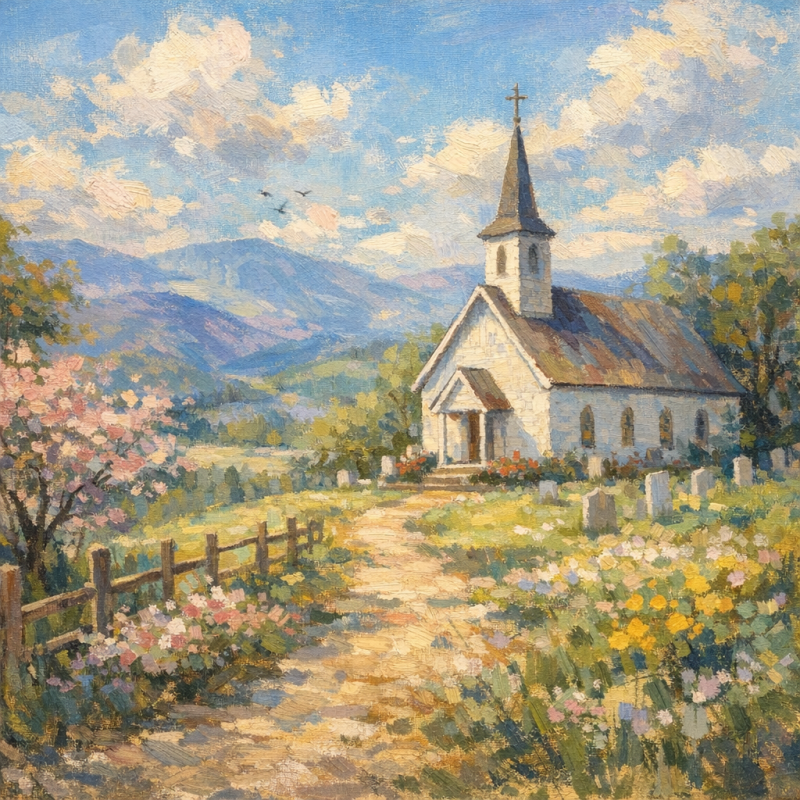
But understanding the history of the church can be just as important as finding the record itself. A church may have changed names, moved locations, merged with another congregation, or split into different churches. Knowing the history of the congregation can help you determine where records may have gone. And sometimes, church history reveals something even more valuable: the community your ancestor belonged to.
Occupations Tell Part of the Story

Your ancestor's occupation can provide a window into their life.
- Farmer.
- Blacksmith.
- Carpenter.
- Miner.
- Merchant.
- Teacher.
- Preacher.
- Railroad worker.
- Mill worker.
These were not simply occupations. They connected people to particular communities and networks. If you discover that several generations of your family worked in the same industry, local history may explain why. Perhaps a railroad came through the area. Maybe a textile mill opened. Perhaps mining brought workers into the mountains. Historical events and economic changes often explain family movements that otherwise seem mysterious.
Newspapers Can Put Your Ancestors Back Into Their Community
Newspapers are another excellent example of where genealogy and local history intersect. An obituary may tell you when your ancestor died, but a newspaper might reveal much more. You may find announcements about weddings, church events, school activities, land sales, accidents, community gatherings, business dealings, court cases, and visits from relatives.
Suddenly, your ancestor becomes more than a name and a date. You begin to see them as a person who participated in a community. And that is one of the greatest rewards of genealogy.

Historical Events Affected Ordinary Families

Major historical events were not experienced only by famous people.
Wars, economic depressions, epidemics, floods, fires, railroad construction, industrial development, political changes, and natural disasters affected ordinary families every day. Understanding what happened locally can help explain why an ancestor suddenly moved, changed occupations, sold property, disappeared from records, or returned home.
Instead of asking only: "Where did my ancestor go?"
You can begin asking: "What happened that might have caused my ancestor to leave?" That question can open an entirely new path of research.
Local History Can Help Separate Fact From Family Tradition
Nearly every family has a story. Perhaps an ancestor supposedly owned a large amount of land. Maybe someone was said to have been a wealthy businessman. Perhaps the family supposedly came from a particular county, state, or even another country. Family traditions should not automatically be dismissed.
But they should not automatically be accepted as fact, either. Local history gives you a way to test those stories.
If the family says an ancestor owned a particular business, historical newspapers, directories, deeds, tax records, and local histories may help confirm—or correct—the story. Sometimes the truth is even more interesting than the family legend.
Genealogy Gives You the Facts. Local History Gives You the Story.
This is perhaps the most important reason local history belongs in genealogy. A birth record gives you a birth date.
A marriage record gives you a marriage date. A census gives you a household. A deed gives you a piece of property.
But local history helps explain what those things meant. It helps us understand the roads our ancestors traveled, the communities they knew, the churches they attended, the work they performed, and the events that shaped their lives.
Without local history, we can build an impressive family tree and still know very little about the people who created it. With local history, those names begin to come alive
Start Looking Beyond Your Family Tree
The next time you are researching an ancestor, don't limit your search to genealogical databases.
- Research the county.
- Research the town.
- Research the church.
- Look at historical maps.
- Read old newspapers.
- Learn about the local economy.
- Study county formation and boundary changes.
- Find out what major events affected the community.
- Look at the families who lived around your ancestor.
- And most importantly, look at the landscape.
Ask yourself what your ancestor would have seen when they stepped outside their front door.
- Where was the nearest church?
- Where was the courthouse?
- How far was the nearest store?
- What mountain, river, or road shaped their daily life?
Those details may seem small, but they are the pieces that transform genealogy from a collection of records into a story.
Your Ancestors Had a Place. Learn Its History.
Good genealogy isn't simply about proving that someone existed.
It is about understanding who they were, where they lived, and how the world around them shaped their lives.
The more we learn about the history of our ancestors' communities, the more accurately we can interpret the records they left behind. So the next time you find yourself stuck on a family tree, step away from the names for a moment. Look at the place. The history of that community may hold the clue you've been searching for all along.
If you would like to participate in our monthly History and Heritage Blog, we’d love to hear your story. Reach out to us through our Contact page or connect with us on social media to get involved and help preserve the voices and memories that matter most.
Create Your Own Website With Webador